
A Colony of Errors
The Land of Opportunists

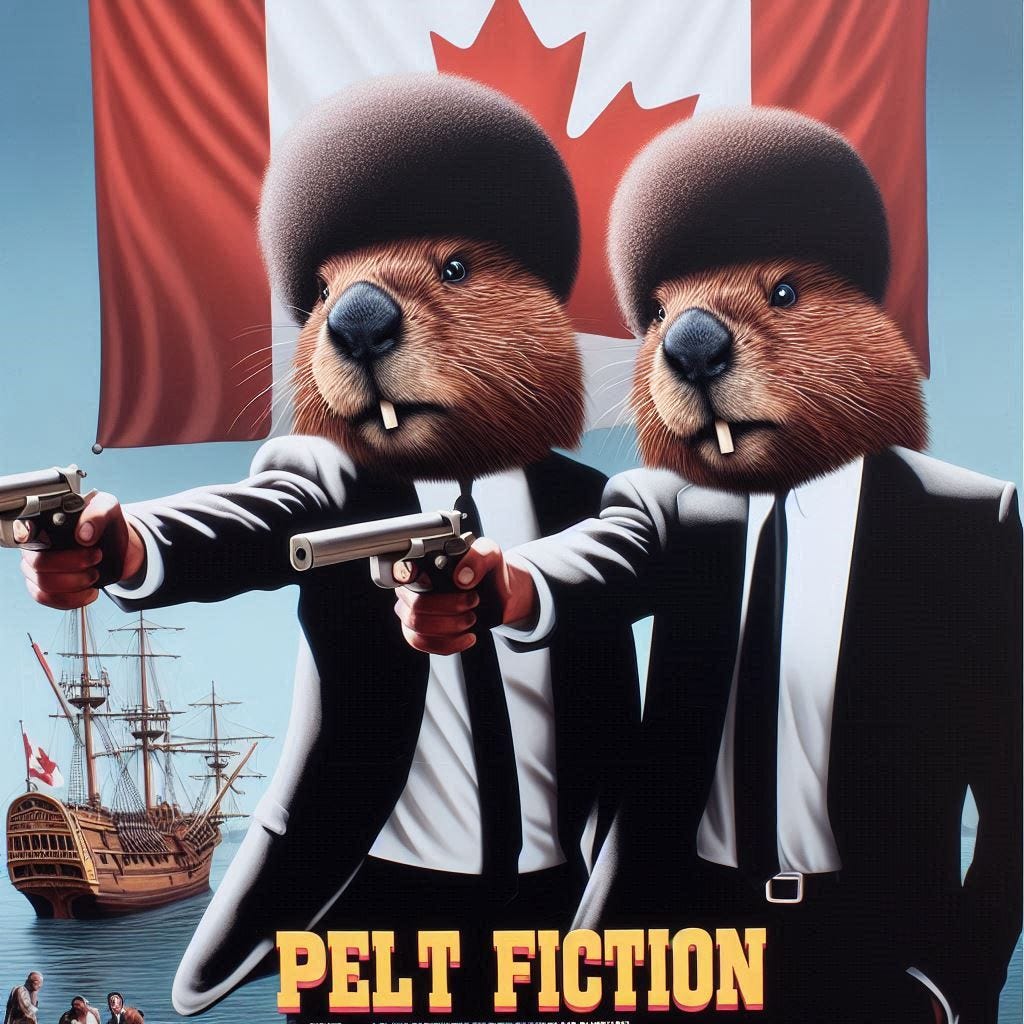
A once popular joke;
Question: What has 40 arms, 40 legs and an IQ of 80?
Answer: The front row at Stampede Wrestling.
Not exactly PC but it makes a useful point; you can convince people fantasy is reality even when they should know better.
Democrats control the weather, Bill Gates put microchips in the Covid vaccine, Haitians are eating peoples pets.
And every single Canadian descended from early settlers is an unrepentant, grimy colonialist in need of rehabilitation.
Perverting Canadian history has been encouraged by Justin Trudeau, a Prime Minister ashamed of the country he leads, famous for gratuitous apologies and professional grade obsequiousness when faced with any allegation of Canada’s failures. Emboldened by this self-flagellation, opportunists emerge, waving sweeping generalizations to highlight problems only they can solve and providing services no one asked for. The opportunist never has to defend a dubious premise; the groundwork has been laid by the Penitent-in-Chief.
Rise Consulting, recently celebrated in the Calgary Herald, is focused on “de-colonializing the workplace”, rescuing the reputation of colonial backsliders. Annie Korver the founder of Rise Consulting, headquartered in Fernie, BC, says of her client discussions; “We always start with the history of colonial harm, because a lot of folks, they still don’t know”.
Exactly what isn’t known is deliciously vague; the lucrative result is any guidance can present as precise…worth every penny.
The framework for the healing dispensed by Rise Consulting is attached to a shaky scaffold; the damage done by the colonial perpetrators wasn’t limited to the period in question. The malice and wickedness was of such a virulent strain, it infected all future generations, a contamination lasting over 500 years…so far.
Say what you like about colonial miscreants, they must have been awfully good in the plunder and pillage department to have left such an indelible stain.
A more objective recitation of Canadian history would suggest different conclusions.
The early European explorers, starting with Cartier and de Champlain, were curious, competitive and driven by a desire for recognition and fortune. They set sail on vermin infested death traps, slept in hammocks 14 inches from the adjacent, flatulent passenger, endured a barely edible diet for 5 to 6 weeks and hoped the scarcely seaworthy ship didn’t sail off the end of a flat earth. Not for the faint of heart. Searching for a route to China, these adventurous souls landed instead in what was to become Canada… a land mass roughly the size of all the countries in Europe combined…wearing homespun trousers and cloth shoes.
Their plan lacked details but was easy to remember; start walking and see what turned up. Contrary to modern myth, the first European explorers didn’t land in Canada and start taking things…primarily because there was very little to take. All Canada offered fortune seekers was opportunity, and even that was given grudgingly.
When travelling in new worlds, the suggested precautions included avoiding omnivorous critters, staying alert for dragons and Unicorns and keeping the blunderbuss primed in case you encountered hostile natives. Subsequently added to the checklist was managing fly swarms, portaging raging rivers and scaling mountains no one had ever climbed…all unmapped.
Villains, blackguards and rogues experienced in crime and mayhem was the resume of the early explorers. They were prepared to do what the situation called for to be successful, a reflection of their own personalities but also the times in which they lived . The world was a violent place in the 1500’s; death, disease, war and inhumanity were common, and if you take the example of the Spanish Inquisition, institutionalized.
As it turned out, a propensity for aggression and violent reciprocity was exactly what was needed if you found yourself strolling along the banks of the St. Lawrence River or on the Northern Peninsula of Newfoundland in 1550. The New World was not an oasis of peace and kindness occupied by people cuddling Mother Earth but rather Indigenous with a verifiable history of violence between waring tribes…the Dorset gave way to the Inuit, the Hanudenosaunee fought the Huron, Montagnais and Algonquin, the Chipewyan fought the Inuit, Blackfoot fought the Cree. In 1660 Montreal was almost wiped out by the Iroquois Confederacy.
The First Nations did not live in Eden…it was a dog-eat-dog world, where aggression was driven by superstition, a fear of the unfamiliar and a desire to enhance wealth and reputation through conquest. The losers’ property was seized or destroyed, captives became slaves and as detailed in Champlain’s diary accounts, scarcely imaginable torture was enthusiastically administered to those who were unfortunate enough to survive the battlefield.
To quote Hobbes, life in the New World was “nasty, brutish and short”, long before the explorers arrived.
Over the centuries, explorers established trade, initially in animal skins for European consumption, and established outposts, known then as factories, built in remote parts of the country. Relationships were established with the Indigenous and European iron tools were exchanged with First Nations in return for beaver pelts, assistance in travel, mutual defense and local knowledge. The assistance of First Nations was critical to the explorers survival and similarly the tools and skills of the Europeans given in compensation, improved life and opportunities for the Indigenous. The explorers and Indigenous embedded representatives in each others’ communities in order to learn language and customs; they intermarried, traded freely and formed alliances against common enemies. The symbiotic relationship between the two was based on necessity and self-interest.
Gradually the explorers pushed North and West, prepared maps, diarized what they observed…the first recorded Canadian history…and built as they could within their competencies. The high point of building was the completion of the CPR in 1885, over 300 years after Champlain, a project which unlocked an unrivaled storehouse of riches in one of the most prosperous nations in the history of mankind, riches still under development.
The work could not have been done without the assistance and support of the Indigenous… Samuel Hearne and Matonabbee for example…so both should be celebrated. But it is fashionable to overlook the risk taking, the building, the sacrifice and bravery it took to build this country. And the building was largely conceived, financed and executed by the colonists, the explorers and the settlers. Flawed as the early settlers were, they got things done. Credit should be given by all Canadians, Indigenous and immigrant alike, as the fortunate beneficiaries of an extraordinary inheritance.
Another perverse storyline on colonial malfeasance alleges the Europeans packaged Smallpox and Tuberculosis next to the maggot-infested hard tack and salt beef with a plan to isolate the germs on a 5-week voyage from Europe to be released if natives were encountered at some point in the future. A bit of a stretch even if you think Trump won the last election. Not only did the Europeans have no immunity from these diseases themselves, they were possessed of such limited medical understanding, they couldn’t manage Scurvy, a prevalent affliction curable with Vitamin C.
Deliberate infection is a canard.
This is not to suggest the settlers were innocent; quite the contrary. They would have been full participants in cruelty and incivility common in the period. But Canadians in 2024 are no more responsible for the crimes and indignities of their forebearers than the modern day First Nations are for the massacre of the Dorset by the Inuit, the genocide of the Wendat by the Cree or the copious torture inflicted on enemies by the Iroquois Confederacy.
Interpreting history through a modern lens distorts the image. So herewith some advice for those presuming to offer guidance on imagined crimes, compliments of Allan Fotheringham. Advising politicians who had taken to writing books, the Foth quipped.
Before writing a book, maybe you should read a few.
Great article. I’ve personally become embroiled over Calgary renaming Fort Calgary to The Confluence. Despite managements insistent that a wide audience was consulted prior to the name change, none of the previous executive or board of directors of Fort Calgary were consulted, and the public was caught by surprise, if you even know this. While no one would disagree with The Fort’s usefulness of increased programming about First Nations history, the site is officially named Fort Calgary for National, Provincial and Calgary historical designation. The next de-colonization effort will be for the Feds, the Province, and the City, to predesignate the site’s name.